
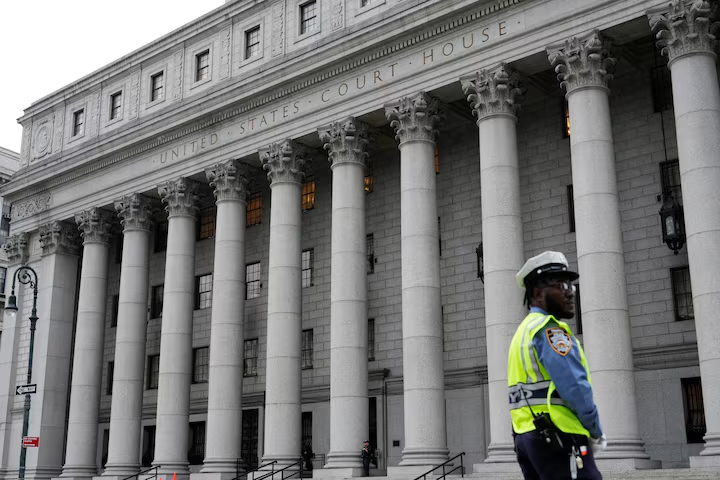
A U.S. appeals court has reversed a contempt ruling against a New York attorney known for filing hundreds of lawsuits over allegedly misleading food labels, finding no evidence that he acted in bad faith.
The 2nd U.S. Circuit Court of Appeals ruled Tuesday that attorney Spencer Sheehan should not have been held in civil contempt over a lawsuit targeting Starbucks’ coffee labeling, according to Reuters.
The case centered on a lawsuit claiming Starbucks’ “100% Arabica coffee” label misled consumers into believing the product contained no additives.
A lower court had dismissed the case and sanctioned Sheehan with a $500 fine, concluding that the claim lacked legal support and was part of a pattern of frivolous filings.
However, the appeals court disagreed, stating that while Sheehan’s arguments may not have been persuasive, they were not frivolous and did not violate any court order.
Judges emphasized that contempt sanctions require clear evidence of bad faith — a standard they said had not been met.
Pattern of consumer lawsuits under scrutiny
Sheehan has built a reputation for filing a large number of consumer class actions focused on product labeling.
He has said he filed more than 500 lawsuits between January 2020 and April 2023, including cases alleging that:
- Kellogg’s Strawberry Pop-Tarts did not contain enough strawberries
- Walmart’s fudge mint cookies lacked actual fudge or mint
Both cases were ultimately dismissed.
In the Starbucks case, the plaintiff argued the labeling implied the absence of additives, while the company countered that there was no evidence supporting that claim and that U.S. regulations did not require disclosure of potassium content on the label.
Appeals court sets higher bar for sanctions
The appellate panel said court-imposed sanctions like contempt orders require a subjective finding of bad faith, not simply weak legal arguments.
The ruling effectively clears Sheehan of wrongdoing in this instance and allows him to continue pursuing similar consumer protection cases.
The decision may also influence how courts handle sanctions in mass litigation, particularly in cases where lawyers bring aggressive or novel claims that test the boundaries of consumer protection law.