
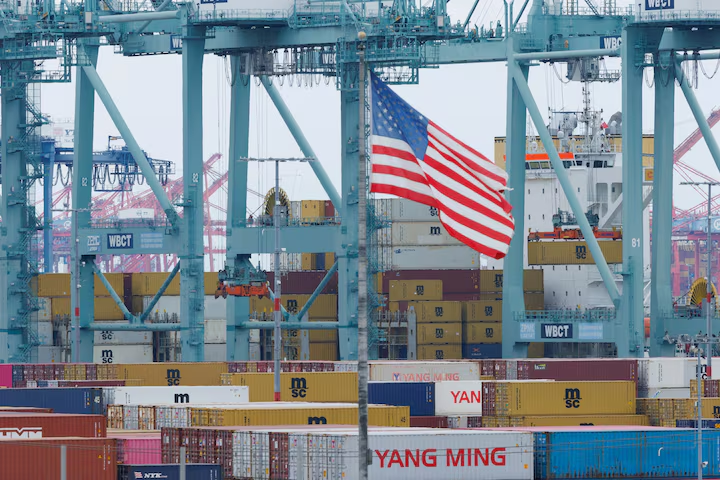
U.S. Customs and Border Protection (CBP) said it will stop collecting tariffs imposed under the International Emergency Economic Powers Act (IEEPA) starting at 12:01 a.m. EST on Tuesday, days after the U.S. Supreme Court ruled the duties unlawful. The development was first reported by Reuters.
In a notice sent to shippers through its Cargo Systems Messaging Service, CBP said it will deactivate all tariff codes tied to former President Donald Trump’s IEEPA-related orders as of Tuesday.
The move follows the Supreme Court’s decision on Friday declaring that Trump could not use the 1977 IEEPA statute to impose broad import tariffs. However, CBP did not explain why collections continued for several days after the ruling. The agency also did not provide details about how potential refunds for importers would be handled.
New tariff replaces those struck down
The halt in IEEPA tariff collections coincides with the implementation of a new 15% global tariff imposed by Trump under a different legal authority. That new measure replaces the duties invalidated by the court.
CBP emphasized that the suspension applies only to tariffs enacted under IEEPA. Other trade measures remain in force, including tariffs imposed under Section 232 of the Trade Expansion Act, which addresses national security concerns, and Section 301 of the Trade Act, which targets unfair trade practices.
“CBP will provide additional guidance to the trade community through CSMS messages as appropriate,” the agency said.
The financial stakes are significant. Reuters reported on Friday that more than $175 billion in tariff revenue collected under IEEPA could now be subject to potential refunds, citing estimates from Penn-Wharton Budget Model economists. Their analysis indicated that IEEPA-based tariffs were generating more than $500 million per day in gross revenue.
While collections under the invalidated authority are set to end, uncertainty remains over how refund claims will be processed and how businesses will navigate the transition to the newly imposed tariff framework.