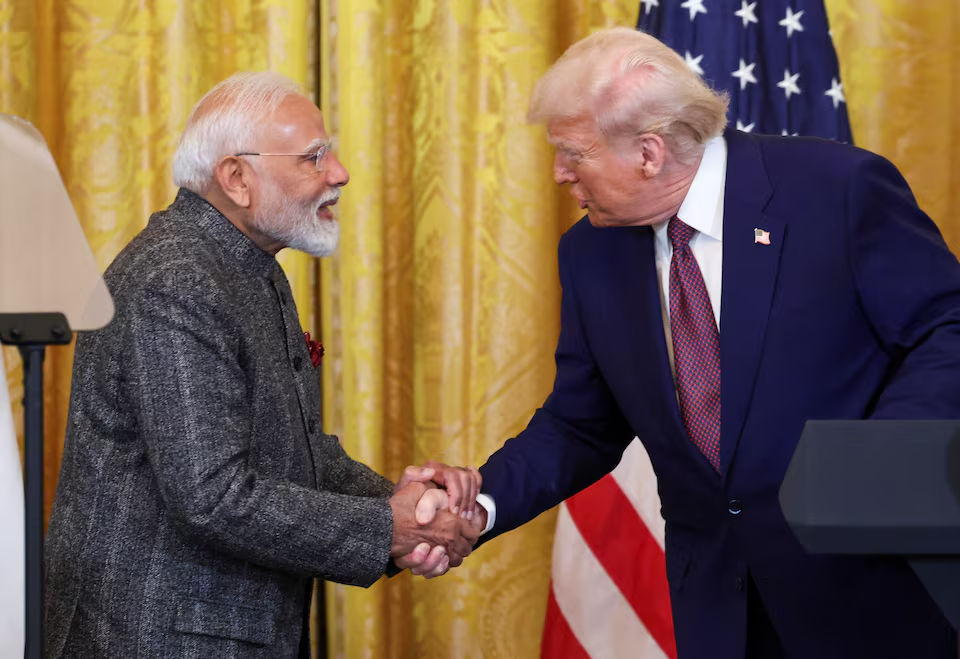
The United States will reduce tariffs on Indian goods to 18% after reaching a trade agreement that includes India ending its purchases of Russian oil, US President Donald Trump said on Monday, signaling a reset in economic ties between Washington and New Delhi after months of tension.
Trump said the deal lowers the US “reciprocal tariff” on Indian exports from 25% to 18%, effective immediately, following a phone call with Indian Prime Minister Narendra Modi. A US official said Washington would also remove a separate 25% punitive duty imposed last year over India’s continued imports of Russian crude, which had pushed total tariffs as high as 50%.
In return, India agreed to lower trade barriers, stop buying Russian oil and replace those supplies with purchases from the United States and potentially Venezuela, Trump said. He added that Modi committed to buying more than $500 billion worth of US energy, technology, agricultural and other products in the coming years.
Indian markets reacted quickly. US-listed shares of major Indian companies rallied, with Infosys rising more than 3%, Wipro jumping about 7% and HDFC Bank gaining over 3%. The iShares MSCI India exchange-traded fund climbed roughly 3.3% in afternoon trading. Indian assets had struggled since the tariffs were imposed, making the country the worst-performing major emerging market in 2025 amid heavy foreign investor outflows.
Energy pressure reshapes trade relations
Trump doubled duties on Indian imports last August to pressure New Delhi to curb purchases of Russian oil and warned earlier this month that tariffs could rise further without compliance. India, the world’s third-largest oil importer, had relied heavily on discounted Russian crude since Moscow’s invasion of Ukraine in 2022, helping lower import costs but straining relations with Western governments enforcing sanctions.
India has recently begun scaling back those purchases. Russian oil imports averaged about 1.2 million barrels per day in January and are expected to fall to around 800,000 barrels per day by March, according to Reuters data.
Trump last week also floated the idea of India buying Venezuelan oil after the United States backed an operation that removed Venezuelan President Nicolás Maduro from power earlier this year. Replacing Russian supplies with US and Venezuelan crude would allow India to maintain energy security while easing geopolitical pressure from Washington.
The agreement follows months of tense negotiations between the world’s two largest democracies, underscoring how trade policy and energy security have become increasingly intertwined in US-India relations.