
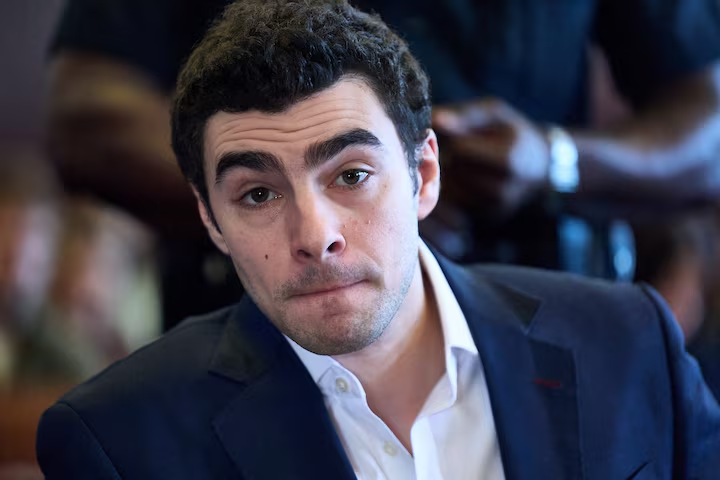
A US federal judge has dismissed murder and weapons charges against Luigi Mangione, removing the possibility of the death penalty in the case tied to the killing of a top health insurance executive.
The ruling marks a significant setback for federal prosecutors, though Mangione still faces severe penalties on remaining charges and a separate state murder case.
US District Judge Margaret Garnett ruled on Friday that federal murder charges could not stand alongside the stalking counts prosecutors brought against Mangione.
She said Supreme Court precedent required the murder and weapons charges to be linked to another qualifying crime of violence. The two stalking charges, she concluded, did not meet that standard.
Garnett said stalking is not inherently violent under federal law and does not always require intentional use of force. Because of that, the court had no choice but to dismiss the murder count.
Mangione still faces life in prison
Although the ruling removes the death penalty from the federal case, Mangione still faces the possibility of life in prison without parole if a jury convicts him on the remaining stalking charges.
Federal prosecutors said they have not yet decided whether to appeal the decision.
Mangione also remains charged with murder in a separate case brought by New York state prosecutors. That case continues independently and still carries the possibility of a life sentence.
Mangione, 27, has pleaded not guilty to all charges connected to the December 2024 killing of UnitedHealthcare executive Brian Thompson.
Thompson led the health insurance division of UnitedHealth Group. Authorities said he was shot and killed outside a Hilton hotel in midtown Manhattan.
Mangione was arrested in Pennsylvania five days later and has remained in custody since then.
Public officials across the country condemned the killing. At the same time, Mangione drew support from some Americans who criticize the cost of medical care and the practices of health insurers.
Court acknowledges legal absurdity
Garnett openly acknowledged that the outcome may confuse the public. She said many people would reasonably view the alleged conduct as violent.
Still, she said the court must follow Supreme Court rulings that narrowly define which crimes qualify as violent under federal statutes.
Legal experts said the decision reflects long-standing efforts by the high court to limit prosecutors’ use of broadly worded federal laws.
Evidence from backpack allowed
In a separate ruling, Garnett rejected Mangione’s request to suppress evidence seized from his backpack at the time of his arrest.
Police recovered a handgun, a silencer and handwritten journal entries. Mangione argued officers searched the bag without a warrant.
The judge ruled that police acted within standard procedures. She said officers had probable cause to search the bag for dangerous items and would have inevitably discovered the evidence through a warrant.
Mangione has also pleaded not guilty to murder, weapons and forgery charges in New York state court.
No trial date has been set in that case. In an earlier setback for state prosecutors, a judge dismissed two terrorism-related counts last year.
Jury selection in the federal case is scheduled to begin in September, with trial proceedings expected to follow in October.