
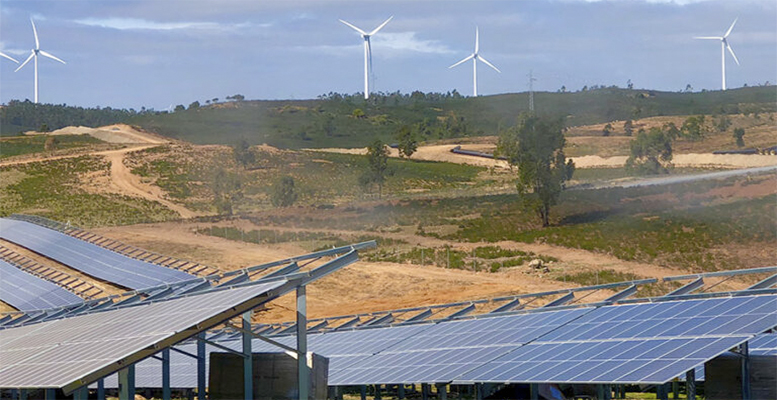
Spain’s protracted battle over retroactive renewable energy policy reforms has entered a critical new phase, as American courts systematically convert international arbitration awards into enforceable judgments on U.S. soil. The latest development came from the U.S. District Court for the District of Columbia, which recently recognized and confirmed a €44 million award in favor of Luxembourg-based 9Ren Holding—bringing the total value of Spain-related renewable energy awards now enforceable in American courts to €688.4 million.
The roots of this litigation avalanche trace back more than a decade to Spain’s dramatic policy reversal on renewable energy incentives. In the early 2000s, amid aggressive efforts to meet European Union climate commitments, Spain implemented one of the continent’s most generous feed-in tariff regimes for solar and wind energy. These guaranteed above-market rates attracted billions in foreign investment, transforming Spain into a European renewable energy leader virtually overnight.
The 2008 financial crisis and subsequent sovereign debt turmoil, however, forced a stark recalibration. Facing unsustainable subsidies that threatened grid economics, Spain executed a series of retroactive reforms beginning in 2010, ultimately dismantling the premium payment structure that had underpinned investor calculations. While defensible from a fiscal policy standpoint, these measures triggered what has become one of the most consequential waves of investor-state arbitration in modern international law.
The 9Ren case exemplifies the multi-jurisdictional enforcement strategy now employed by aggrieved investors. After investing €211 million in eight photovoltaic installations predicated on Spain’s original tariff guarantees, 9Ren invoked the International Centre for Settlement of Investment Disputes (ICSID) Convention and the Energy Charter Treaty in 2015—legal instruments specifically designed to protect cross-border energy investments.
The arbitral tribunal issued its award in May 2019, initially granting €40 million of the €50 million claimed, with the figure now escalating to €44 million through accumulated interest and legal costs. Spain’s refusal to satisfy the award voluntarily—a pattern it has maintained across numerous similar disputes—forced 9Ren to pursue recognition in multiple jurisdictions. Beyond the recent U.S. court victory, 9Ren secured a parallel enforcement order from Australia’s Federal Court in August, which recognized four separate renewable energy awards totaling €469 million against Spain.
The significance of U.S. court recognition cannot be overstated. Under the New York Convention on the Recognition and Enforcement of Foreign Arbitral Awards—to which both Spain and the United States are signatories—awards confirmed by American courts gain direct access to Spanish sovereign assets located within U.S. jurisdiction. This creates tangible enforcement leverage that purely international awards lack.
The roster of successful U.S. enforcement actions now reads like a who’s who of international infrastructure investors: Cube Infrastructure (€40.2 million), Watkins Holdings (€79.5 million), Infrastructure Services/Antin (€125.1 million), RREEF Infrastructure (€74 million), InfraRed Environmental Infrastructure (€35 million), and NextEra Energy (€290.6 million). Together with 9Ren’s award, these judgments represent €688.4 million in immediately enforceable obligations—a figure that excludes numerous pending arbitrations that could push Spain’s ultimate liability well beyond €1 billion.
Spain’s predicament, while exceptional in scale, is not unique. Similar renewable energy disputes have emerged against the Czech Republic, Italy, and most notably Argentina, whose early-2000s economic crisis triggered a comparable wave of investor-state claims. What distinguishes Spain’s situation is the sheer volume of cases and the European Union’s complex position on intra-EU application of the Energy Charter Treaty—a jurisdictional debate that remains unresolved even as enforcement proceedings march forward.
Unlike Argentina, which eventually negotiated global settlements with creditor groups, Spain has adopted a strategy of non-recognition, contesting each award’s validity while arguing that intra-EU arbitrations violate European law supremacy principles. This approach has proven largely unsuccessful in non-EU courts, which have shown little appetite for Spanish sovereignty defenses when confronted with procedurally sound arbitral awards. t
The cascading U.S. court confirmations place Spain in an increasingly untenable position. While sovereign immunity shields most Spanish government assets from attachment, revenue-generating commercial property and certain financial accounts may prove vulnerable to enforcement actions. More significantly, the reputational damage of prolonged non-compliance threatens Spain’s standing in international capital markets at a time when the country seeks massive foreign investment for its green energy transition under the EU’s climate framework.
As additional cases wend through the enforcement pipeline—with several dozen arbitrations still pending at various stages—Spain faces mounting pressure to negotiate comprehensive settlements. The €688 million now enforceable in American courts may ultimately represent merely the opening chapter of what could become a multi-billion-euro reckoning for renewable energy policy decisions made in a very different fiscal era.