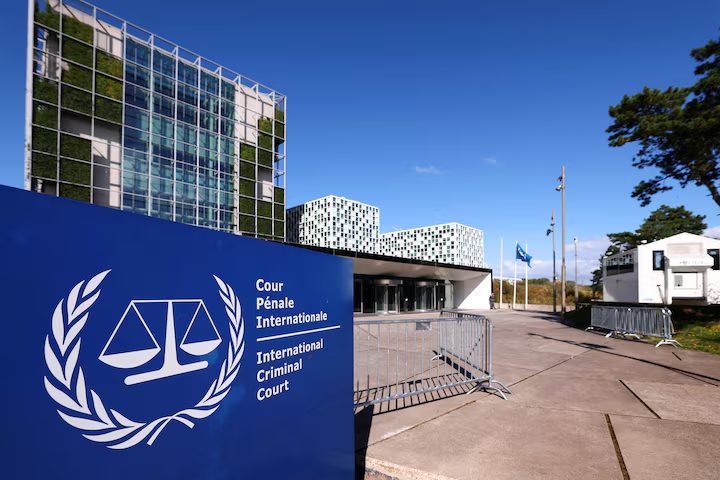
The Trump administration has expanded its sanctions campaign against the International Criminal Court, targeting two additional judges over their involvement in cases related to Israel. The move deepens a growing standoff between Washington and the Hague-based tribunal and raises fresh concerns about political pressure on international judicial institutions.
The sanctions, announced on Thursday, apply to ICC judges Gocha Lordkipanidze of Georgia and Erdenebalsuren Damdin of Mongolia. U.S. officials said the judges played a direct role in actions aimed at investigating or prosecuting Israeli nationals without Israel’s consent.
The measures impose travel bans and financial restrictions in the United States, effectively blocking access to U.S.-based assets and making routine financial activity difficult.
The latest designations follow arrest warrants issued by ICC judges in November 2024 for Israeli Prime Minister Benjamin Netanyahu and former defense minister Yoav Gallant. Prosecutors accused the two leaders of war crimes and crimes against humanity linked to the Gaza conflict. Israel has rejected the court’s jurisdiction and denies the allegations.
Escalating pressure on the International Criminal Court
With the new sanctions, the Trump administration has now targeted nine ICC judges and prosecutors. Officials have also warned that Washington could designate the entire court if it does not drop the Israel-related cases. A senior administration official previously told Reuters that the United States wants the ICC to formally close an earlier investigation into U.S. military actions in Afghanistan and to amend its founding statute to prevent any future prosecution of Trump or senior U.S. officials.
Secretary of State Marco Rubio defended the measures in a statement, accusing the court of politicized conduct. He said the ICC’s actions against Israel set a dangerous precedent and violated the sovereignty of both Israel and the United States.
Rubio also linked the sanctions to a recent judicial decision rejecting an Israeli legal challenge to the scope of the Gaza investigation.
The judges now under sanctions served on a panel that refused to overturn a lower court ruling. That decision allowed prosecutors to examine alleged crimes committed after the October 7, 2023, attack on Israel by Hamas. According to U.S. officials, that vote formed part of the basis for the sanctions.
The ICC condemned the move, calling it a direct assault on judicial independence. In a statement, the court said the sanctions threaten the international legal order and undermine the ability of judges to operate without external interference. This marks the fourth round of U.S. sanctions against ICC officials this year.
The Netherlands, which hosts the court in The Hague, also criticized the decision. Dutch Foreign Minister David van Weel said international courts must be free to carry out their mandates without political pressure.
Neither the United States nor Israel is a member of the ICC. However, the court asserts jurisdiction over crimes committed on the territory of its member states, including the Palestinian territories, which joined the ICC in 2015.
The court has 125 member states, including all European Union countries, though major powers such as the United States, China, and Russia remain outside the system.
The case underscores a widening divide over the role of international justice and the limits of accountability for state leaders. As the sanctions expand, legal experts warn that continued pressure on the ICC could have lasting consequences for the credibility and effectiveness of international criminal law.