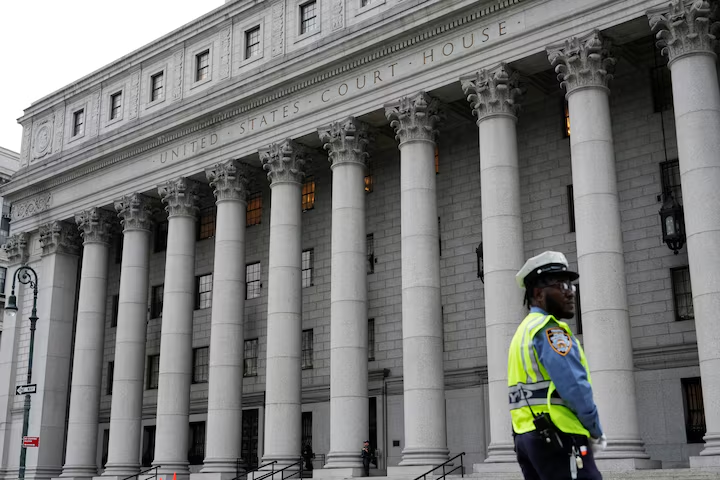
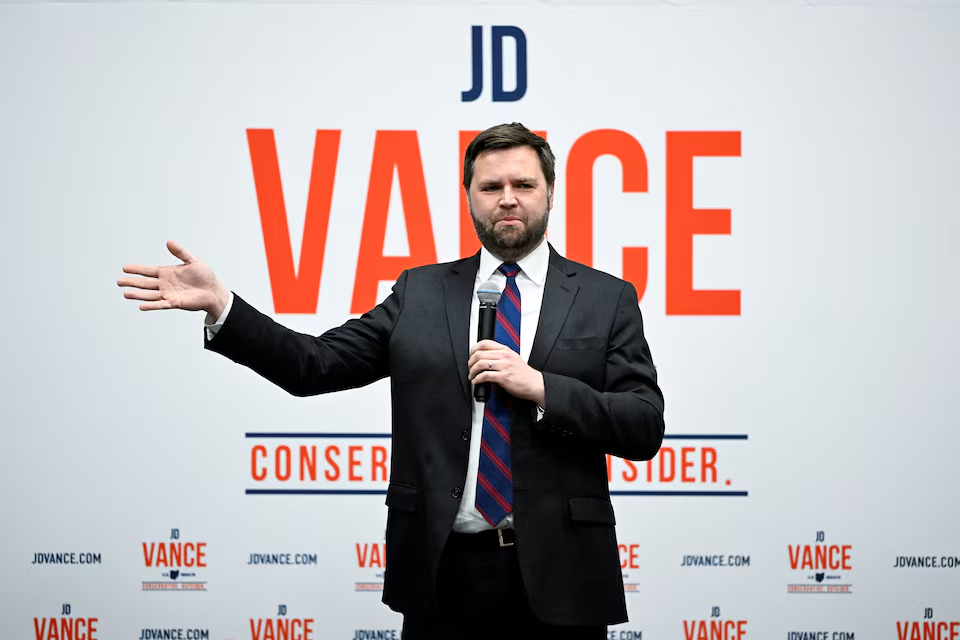
The U.S. Supreme Court returned to the center of the campaign-finance debate on Tuesday as it considered a Republican effort to strike down federal caps on spending coordinated between political parties and candidates. The case, which began when JD Vance was running for the U.S. Senate in Ohio, now places the sitting vice president in the middle of a constitutional fight over free-speech protections and the role of political parties.
how the justices approached the limits
Conservative justices pressed government lawyers on whether the current rules weaken political parties while empowering outside groups that face fewer restrictions. Justice Brett Kavanaugh said the structure “may distort the system,” since super PACs can spend freely as long as they avoid coordinating with campaigns.
The Court’s three liberal justices took the opposite view. Justice Sonia Sotomayor warned that ending limits on coordinated spending would erase a key barrier between candidates and donors. She pointed to concerns that wealthy supporters could gain access or influence, especially when campaigns raise unprecedented sums.
The challengers—two Republican committees, former congressman Steve Chabot and Vance—argued that coordinated party spending is a form of political expression that Congress cannot restrict. They said the First Amendment should stop lawmakers from dictating how much money a party can spend while working directly with a candidate.
Because the Federal Election Commission declined to defend the law, the Court appointed an outside attorney to argue in support of the restrictions. That lawyer, Roman Martinez, said coordinated expenditures resemble “basic campaign operations” rather than independent political messages. He added that the case may no longer be active because Vance has not formally announced plans to run again.
Republican lawyers disagreed, saying Vance still faces the restriction and has not ruled out a 2028 campaign.
The Court’s ruling will arrive as both parties gear up for the 2026 midterms. Democrats lead in small-donor fundraising, while Republicans dominate in the less-regulated super PAC ecosystem. The 6th U.S. Circuit Court of Appeals upheld the coordinated-spending limits last year, calling them a legitimate anticorruption safeguard.
A final decision is expected by June.