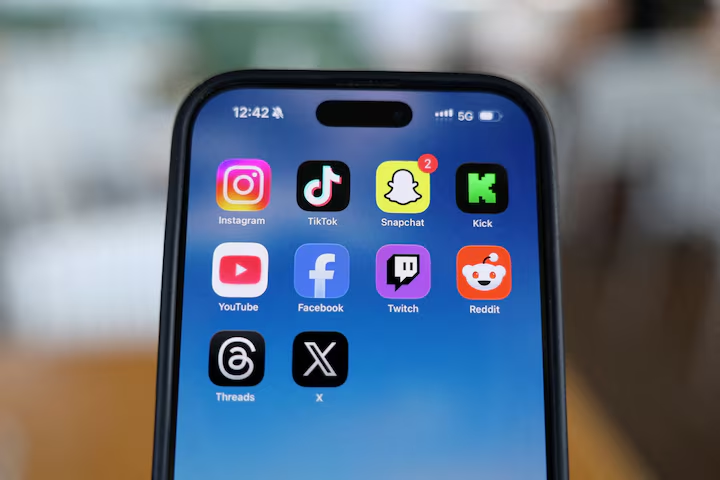
Meta Platforms, TikTok and YouTube will enter a Los Angeles courtroom this week to defend themselves against claims that their platforms contributed to a teen’s depression and addiction, marking the first U.S. trial to directly test whether social media companies can be held liable for alleged harms to young users.
The case, filed in California Superior Court, could set the tone for thousands of similar lawsuits nationwide. Legal experts say a verdict against the companies would challenge one of Big Tech’s most durable legal shields and accelerate a broader reckoning over children’s screen time and platform design.
The plaintiff, a 19-year-old California woman identified as K.G.M., argues that she became hooked on social media as a child because of features designed to maximize engagement. According to court filings, she says prolonged use worsened her depression and led to suicidal thoughts. Jury selection begins Tuesday.
Her lawsuit targets Meta, TikTok, YouTube and Snap. Snap agreed last week to settle its portion of the case, leaving the remaining companies to stand trial. A Snap spokesperson declined to discuss the terms of the settlement.
A test of long-standing legal protections
At the heart of the case is whether a federal law that generally shields online platforms from liability for user-generated content also protects them from claims tied to their product design. For decades, courts have dismissed similar lawsuits at early stages. This case moves past that threshold.
The plaintiff’s attorney, Matthew Bergman, said jurors will hear arguments that focus not on user posts, but on how the platforms themselves operate. He described the trial as legally uncharted territory and said the outcome could eventually land before the U.S. Supreme Court.
Meta CEO Mark Zuckerberg is expected to testify. Meta plans to argue that its products did not cause K.G.M.’s mental health struggles and that other factors explain her condition, according to company lawyers.
YouTube intends to distance itself from rivals like Instagram and TikTok, arguing that its platform functions differently and should not face the same scrutiny. TikTok declined to comment on its legal strategy ahead of the trial.
Public opinion battle alongside the courtroom fight
As the case unfolds, the companies are also working to shape public perception. Meta, TikTok and YouTube have invested heavily in safety tools and outreach programs aimed at parents and schools. They say these efforts show a commitment to teen well-being.
Meta has sponsored parent workshops across the United States and partnered with the National PTA on events focused on online safety. TikTok has supported similar initiatives through local PTAs, highlighting features that allow parents to limit screen time. Google, YouTube’s parent company, has worked with the Girl Scouts to promote digital safety lessons for children.
Critics argue these efforts do not address deeper concerns about addictive design. Julie Scelfo, founder of Mothers Against Media Addiction, said the companies deploy influence across legal, educational and public relations fronts, which can leave parents unsure whom to trust.
Legal observers say the trial’s outcome will matter well beyond this single plaintiff. If jurors side with K.G.M., it could open the door to broader accountability for how social media platforms design products used by children and teenagers.