
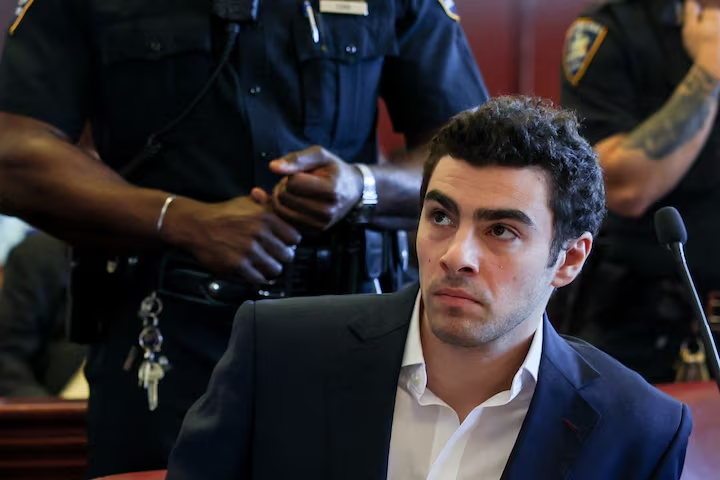
Luigi Mangione, the man accused of killing a health insurance executive outside a Manhattan hotel, returned to federal court on Friday as a judge considered whether prosecutors can use critical evidence in a case that could carry the death penalty.
Mangione, 27, has pleaded not guilty to murder, stalking and weapons charges tied to the fatal shooting of UnitedHealthcare chief executive Brian Thompson. The killing shocked public officials and the business community. At the same time, it drew a small but vocal group of supporters who frame the case through anger over U.S. healthcare costs and insurance practices.
During the hearing before U.S. District Judge Margaret Garnett in Manhattan, the focus centered on the circumstances of Mangione’s arrest in Pennsylvania and the subsequent search of his backpack. His defense team argues that police violated his constitutional rights by searching the bag without a warrant, and that any evidence recovered should therefore be excluded from trial.
Prosecutors from the U.S. Attorney’s Office for the Southern District of New York maintain the search was lawful. They say officers arrested Mangione for providing false identification and were permitted to examine the backpack for safety reasons before transporting him.
Disputed search and death penalty stakes
At issue are items prosecutors consider central to their case, including a 9-millimeter handgun, a silencer and handwritten journal entries found inside the backpack. Defense lawyer Marc Agnifilo pressed police witnesses on whether department procedures required officers to obtain a warrant once they discovered a firearm.
Nathan Snyder, deputy chief of the Altoona, Pennsylvania Police Department, testified that officers would “probably” seek a warrant if they encountered illegal items such as drugs or guns. However, under questioning by prosecutors, Snyder said officers would continue searching for additional dangerous items if a weapon were found.
Judge Garnett ended the hearing without issuing a ruling. She scheduled jury selection for September 8, leaving unresolved whether the contested evidence will be allowed at trial.
Beyond the backpack search, Mangione’s lawyers have filed separate motions asking the court to dismiss the federal indictment on legal grounds or, alternatively, to block prosecutors from pursuing the death penalty. They argue that alleged violations of Mangione’s constitutional rights make such a punishment inappropriate.
Mangione also faces a parallel case in New York state court brought by Manhattan District Attorney Alvin Bragg. In that proceeding, a different judge is considering a similar request to suppress evidence recovered during the arrest. No trial date has been set in the state case.
The rulings on these motions are expected to shape the trajectory of one of the most closely watched criminal cases to reach a New York courtroom in recent years.