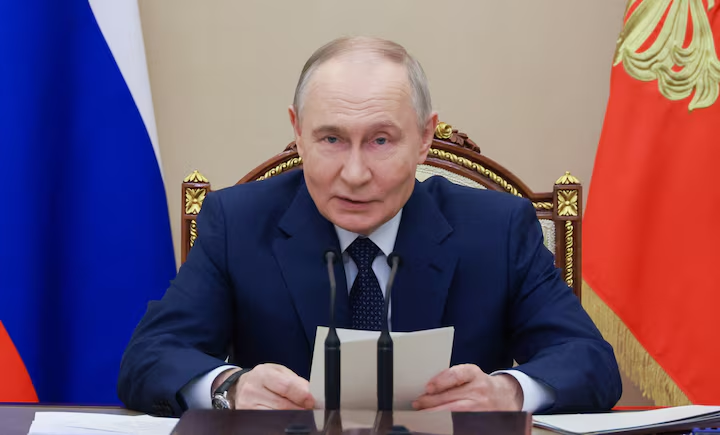
Russian President Vladimir Putin has signed amendments to domestic law that allow Russia to ignore judgments issued by foreign and international criminal courts. The move strengthens Moscow’s legal position against external judicial actions linked to the war in Ukraine and formalizes a long-standing refusal to recognize the authority of certain international tribunals.
The changes, approved on Monday, give Russian authorities the right to disregard criminal rulings issued by foreign courts acting on behalf of other states when Russia did not participate in the proceedings. The law also applies to decisions from international judicial bodies whose authority does not stem from a treaty with Russia or a resolution of the United Nations Security Council.
The timing reflects mounting legal pressure on Moscow. Several European and Ukrainian-backed initiatives have sought to hold Russian officials and military personnel accountable for alleged war crimes in Ukraine, accusations that the Kremlin continues to deny. The legal shift comes as U.S. President Donald Trump pursues diplomatic efforts aimed at brokering a settlement to the conflict.
Law targets international efforts tied to Ukraine conflict
In recent months, Ukraine and the Council of Europe’s human rights body signed an agreement laying the groundwork for a special tribunal focused on crimes linked to Russia’s invasion. European states have also launched an International Claims Commission designed to assess compensation for damage caused by Russian attacks, with estimates running into hundreds of billions of dollars.
At the same time, the International Criminal Court in The Hague issued arrest warrants for Putin and five other Russian nationals. Prosecutors accused them of illegally deporting Ukrainian children. Moscow rejected the allegations and described the ICC’s actions as outrageous. Russian officials insist that authorities moved children out of combat zones to protect them, not to commit crimes.
By embedding these legal protections into domestic law, the Kremlin has reinforced its position that foreign courts lack jurisdiction over Russian actions. The amendments ensure that Russian courts and officials can formally dismiss external criminal rulings without violating national legislation.
Legal analysts say the move deepens the divide between Russia and international justice mechanisms. It also underscores the limits of enforcement when major powers refuse to recognize foreign or international criminal jurisdiction. While the amendments do not change Russia’s stance overnight, they provide a clearer legal shield against future proceedings initiated abroad.
As international legal efforts related to Ukraine continue to expand, the revised law signals that Moscow intends to rely on domestic sovereignty to counter those actions. The broader implications may shape how future disputes between states and international courts unfold, particularly in cases involving non-member or non-cooperative countries.